
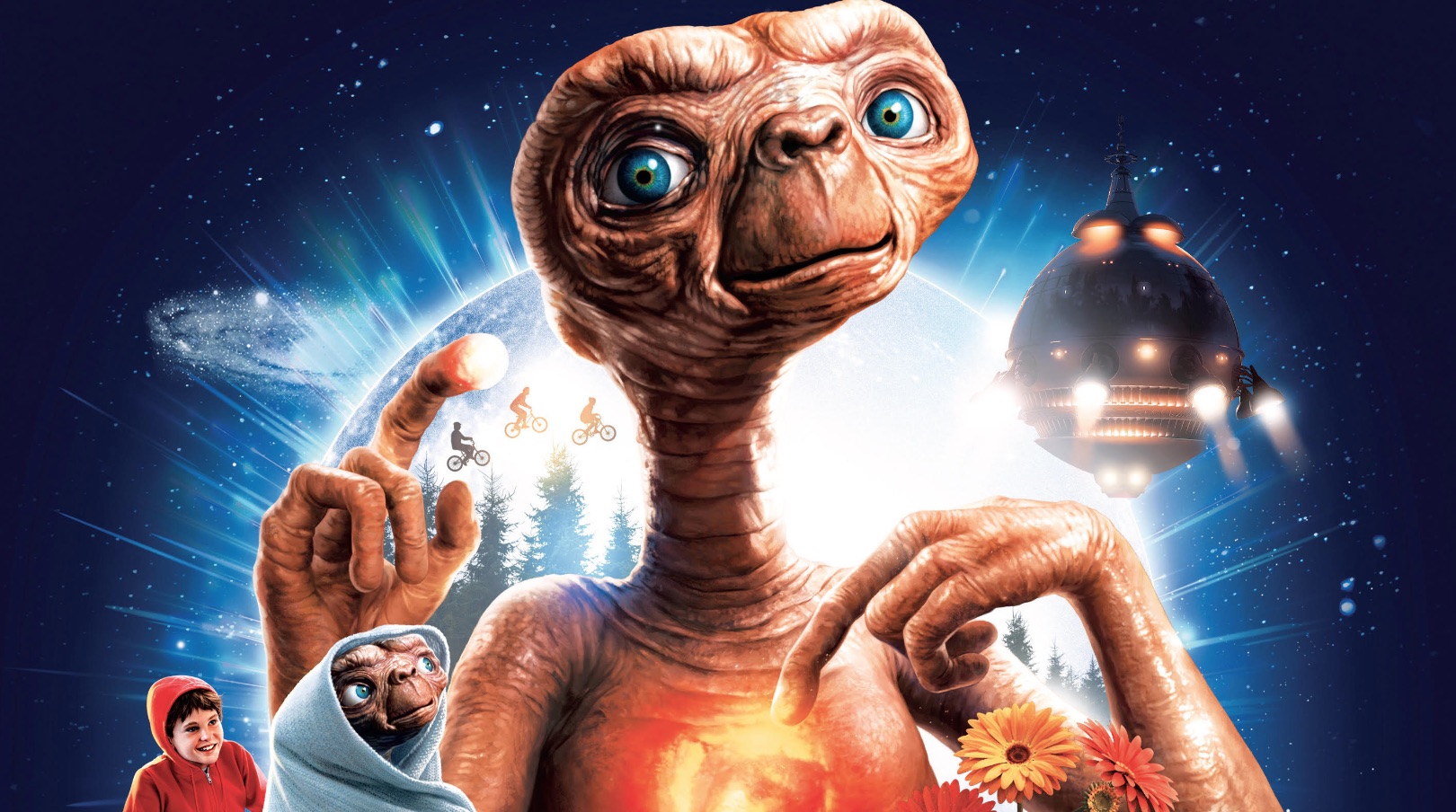
Remember that feeling of wonder, that lump in your throat, the unshakeable belief in something extraordinary? That's the magic E.T. the Extra-Terrestrial conjures. A childhood classic for many, this film is more than just a story about an alien; it's a poignant exploration of friendship, loneliness, and the boundless power of imagination. (Relive the magic of E.T.! Our E.T. the Extra-Terrestrial Movie Review explores the heartwarming adventure of friendship across worlds, examining its enduring appeal.) But does this Steven Spielberg masterpiece still hold up after all these years? Let’s dive in!
At its core, E.T. isn’t really about aliens or spaceships. It’s about Elliott, a lonely kid struggling with his parents' separation, who finds an unlikely friend in a stranded extraterrestrial. The film expertly weaves together themes of childhood wonder, the pain of growing up, and the universal need for connection. Spielberg masterfully uses visual storytelling and John Williams’ iconic score to amplify the emotional impact, creating scenes that are both whimsical and deeply moving. The government’s heavy-handed intrusion, the fear of the unknown, and the lengths to which Elliott and his siblings go to protect E.T. create a compelling narrative that resonates with audiences of all ages.
So, who is this movie for? Honestly, everyone! While it's a fantastic film for kids, sparking their imaginations and teaching them about empathy and acceptance, adults will find themselves revisiting their own childhoods, remembering the power of believing in something bigger than themselves. Anyone who has ever felt alone, different, or yearned for a connection will find something to relate to in Elliott and E.T.'s bond. It’s a film that transcends age and cultural boundaries, speaking to the universal human experience of seeking belonging and understanding.
Ultimately, E.T. the Extra-Terrestrial remains a cinematic triumph. Its enduring appeal lies not just in its fantastical premise, but in its honest and heartfelt portrayal of friendship. The film's impact is undeniable, solidifying its place as a cornerstone of popular culture. A true testament to the power of storytelling, E.T. reminds us that even in the face of the unknown, the bonds of friendship can transcend any distance, any difference, any world.
A Nostalgic Journey Back to Childhood
Why E.T. Still Resonates Today
E.T. isn't just a movie; it's a cultural touchstone. The bicycle scene against the backdrop of the moon is instantly recognizable, and the image of E.T.’s glowing finger touching Elliott’s is etched in our collective memory. But what makes it so enduring?
Simplicity and Sincerity: In a world of complex narratives and CGI-heavy blockbusters, E.T.'s simple story of friendship stands out. Its sincerity and emotional depth are refreshing, offering a genuine connection that’s often missing in modern films. Relatable Characters: Elliott, his siblings Michael and Gertie, and their single mother Mary are all incredibly relatable characters. Their struggles and triumphs feel authentic, making it easy to invest in their journey. Universal Themes: The film explores universal themes of loneliness, friendship, loss, and acceptance. These are emotions that resonate with people of all ages and backgrounds, making E.T. a timeless story. Spielberg's Magic: Steven Spielberg's directorial prowess is undeniable. He masterfully blends fantasy and reality, creating a world that feels both magical and grounded. His ability to elicit genuine emotion from his young actors is particularly impressive.
The Impact of John Williams' Score
John Williams' score is an integral part of E.T.'s magic. The music is both soaring and intimate, perfectly capturing the film's emotional beats. The iconic theme is instantly recognizable and evokes a sense of wonder and nostalgia.
Emotional Amplification: Williams' score doesn't just accompany the film; it enhances it. The music amplifies the emotional impact of each scene, making us feel the joy, the sadness, and the excitement right along with the characters. Creating Atmosphere: The score also plays a crucial role in creating the film's atmosphere. The music helps to establish the sense of wonder and mystery surrounding E.T., while also conveying the warmth and intimacy of Elliott and E.T.'s friendship. Iconic Themes: The main theme from E.T. is one of the most recognizable and beloved film scores of all time. It's a testament to Williams' genius and his ability to create music that resonates with audiences on a deep emotional level.
Behind the Scenes: The Making of a Classic
Casting the Perfect Elliott
Finding the right actor to play Elliott was crucial to the film's success. Henry Thomas, who was just nine years old at the time, won the role with his heartfelt audition.
Authenticity and Vulnerability: Thomas brought an authenticity and vulnerability to the role that made Elliott incredibly relatable. His performance captured the loneliness and longing that were central to the character. Chemistry with E.T.: Thomas also had a natural chemistry with E.T., which was essential for making the friendship between Elliott and the alien believable. Improvisation and Spontaneity: Spielberg encouraged Thomas to improvise and bring his own personality to the role. This spontaneity added to the authenticity of his performance.
The Creation of E.T.
Creating E.T. was a complex process that involved a team of artists, engineers, and puppeteers.
Carlo Rambaldi's Design: Italian special effects artist Carlo Rambaldi designed E.T.'s distinctive look. Rambaldi drew inspiration from various sources, including cats, tortoises, and Ernest Hemingway. Animatronics and Puppetry: E.T. was brought to life using a combination of animatronics and puppetry. Several different E.T. models were created, each with its own specific functions. Voice Acting: The voice of E.T. was provided by several different actors, including Debra Winger and Pat Welsh. The final voice was a combination of their performances, creating a unique and otherworldly sound.
Overcoming Challenges
The making of E.T. wasn't without its challenges. Spielberg faced numerous obstacles, including budgetary constraints, technical difficulties, and concerns from the studio about the film's commercial viability.
Budget and Time Constraints: Spielberg had a relatively small budget and a tight schedule for E.T. This forced him to be creative and resourceful. Technical Difficulties: The animatronics used to create E.T. were complex and prone to malfunctions. This required constant adjustments and repairs. Studio Concerns: Some studio executives were worried that E.T. would be too scary for children or that it wouldn't appeal to a wide audience. Spielberg had to fight to maintain his vision for the film.
Exploring the Film's Themes
The Power of Friendship
At its heart, E.T. is a story about the power of friendship. Elliott and E.T. form an unlikely bond that transcends language and cultural barriers.
Unconditional Acceptance: Elliott accepts E.T. for who he is, without judgment or prejudice. This unconditional acceptance is the foundation of their friendship. Empathy and Compassion: Elliott shows empathy and compassion for E.T., understanding his longing for home and his fear of being captured. Sacrifice and Loyalty: Elliott is willing to sacrifice his own safety and well-being to protect E.T. Their loyalty to each other is unwavering.
The Loneliness of Childhood
The film also explores the loneliness of childhood, particularly the feeling of being misunderstood or isolated.
Elliott's Isolation: Elliott feels isolated from his family and peers. He struggles to cope with his parents' separation and feels like an outsider. E.T.'s Homesickness: E.T. is also lonely, longing for his home and his family. He is stranded on Earth and feels lost and afraid. Finding Connection: Elliott and E.T. find solace in each other's company. They understand each other's loneliness and provide each other with a sense of belonging.
The Fear of the Unknown
E.T. also touches on the fear of the unknown, both on a personal and a societal level.
Fear of the Other: The government agents in the film represent the fear of the other. They see E.T. as a threat and are determined to capture him, regardless of the consequences. Elliott's Courage: Elliott overcomes his fear of the unknown and embraces E.T. He learns that the unknown is not always something to be feared, but can also be a source of wonder and discovery. Embracing Difference: The film encourages viewers to embrace difference and to be open to new experiences. It reminds us that the most extraordinary things can often be found in the most unexpected places.
FAQ About E.T. the Extra-Terrestrial
General Questions
What is E.T. the Extra-Terrestrial about?
E.T. the Extra-Terrestrial is a science fiction film that tells the story of a young boy named Elliott who befriends an extraterrestrial stranded on Earth. The movie focuses on their developing friendship and Elliott's efforts to help E.T. return home while evading government agencies. This is a heartwarming adventure, and a perfect example of E.T. the Extra-Terrestrial Movie Review - A Heartwarming Adventure of Friendship Across Worlds .
When was E.T. the Extra-Terrestrial released?
The film was originally released in the United States on June 11, 1982. It has since been re-released in theaters several times.
Who directed E.T. the Extra-Terrestrial ?
The film was directed by Steven Spielberg.
Who wrote the screenplay for E.T. the Extra-Terrestrial ?
The screenplay was written by Melissa Mathison.
Who are the main actors in E.T. the Extra-Terrestrial ?
The main actors in the film include Henry Thomas as Elliott, Drew Barrymore as Gertie, Robert MacNaughton as Michael, Dee Wallace as Mary, and Peter Coyote as Keys.
Production and Behind-the-Scenes Questions
How was E.T. created?
E.T. was created using a combination of animatronics, puppetry, and visual effects. The design was created by Carlo Rambaldi.
How did they make E.T. move and speak?
E.T.'s movements and expressions were controlled by puppeteers and animatronic devices. The voice of E.T. was a combination of several voice actors, including Debra Winger and Pat Welsh.
How old were the child actors during filming?
Henry Thomas was around 9 years old, Drew Barrymore was around 6 years old, and Robert MacNaughton was around 15 years old during filming.
What were some of the challenges in making the film?
Some of the challenges included creating a believable alien character, working with child actors, and balancing the film's themes of wonder and suspense. Securing the rights to use Reese's Pieces was also a stroke of genius.
Thematic and Interpretive Questions
What are the main themes of E.T. the Extra-Terrestrial ?
The main themes of the film include friendship, loneliness, childhood, the fear of the unknown, and the importance of empathy and understanding.
What does E.T. symbolize?
E.T. can be interpreted as a symbol of the outsider, the misunderstood, or the marginalized. He also represents the power of connection and the importance of accepting those who are different from us.
Why is E.T. the Extra-Terrestrial so beloved?
The film is beloved for its heartwarming story, its memorable characters, its beautiful visuals, and its universal themes. It appeals to audiences of all ages and has a timeless quality that continues to resonate today.
What impact did E.T. the Extra-Terrestrial have on popular culture?
E.T. the Extra-Terrestrial had a significant impact on popular culture, influencing subsequent science fiction films, television shows, and other forms of media. It also popularized the idea of friendly aliens and helped to change the way people viewed extraterrestrial life.
Conclusion: A Timeless Classic
E.T. the Extra-Terrestrial isn't just a movie; it's an experience. It's a journey back to childhood, a reminder of the power of friendship, and a celebration of the human spirit. Even decades after its release, it continues to captivate audiences with its heartwarming story, its memorable characters, and its timeless themes. This E.T. the Extra-Terrestrial Movie Review - A Heartwarming Adventure of Friendship Across Worlds reinforces that it's a must-see for anyone who believes in the magic of cinema and the power of connection.