
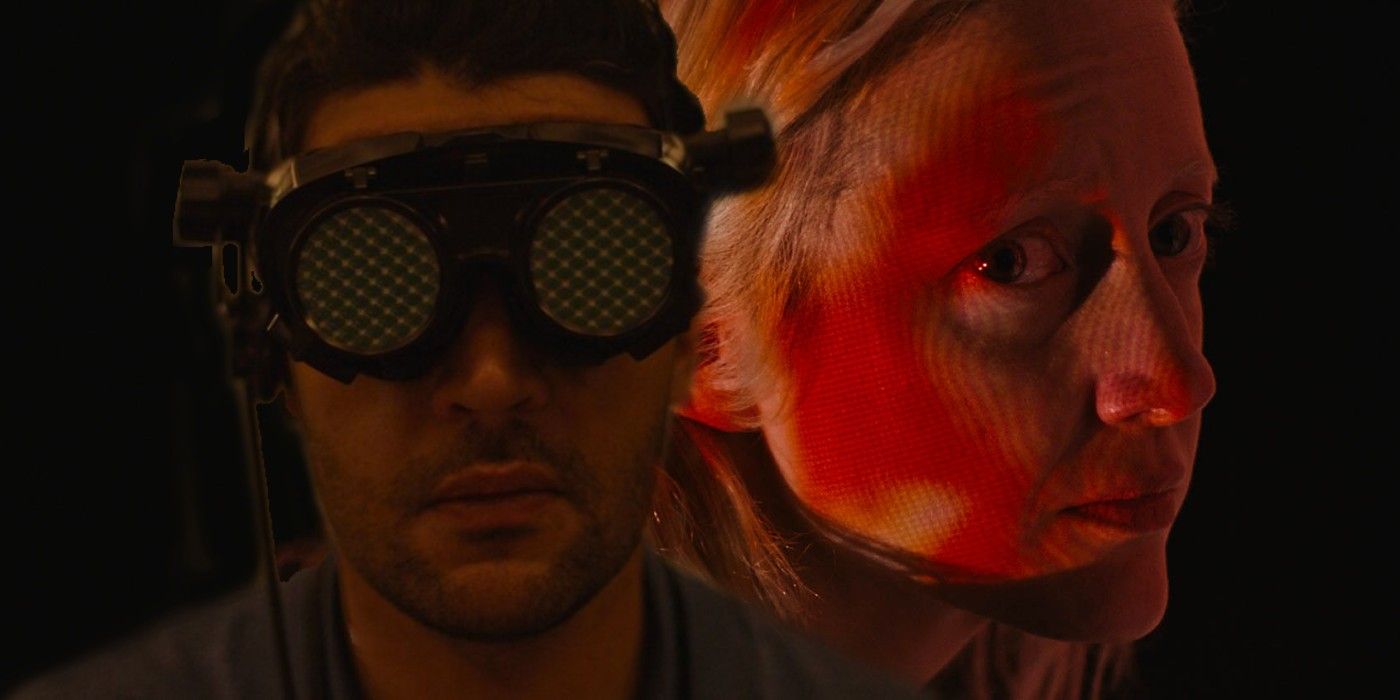
Imagine a world where you could inhabit someone else's body, not for kicks, but for cold, calculated assassination. That's the unsettling premise of Possessor , a sci-fi horror film that dives deep into the murky waters of identity, control, and the terrifying consequences of technological overreach. This Possessor Movie Review: Body-Swapping Horror and Identity Crisis in Sci-Fi will explore why this film is more than just a gore-fest; it's a chilling exploration of the human psyche pushed to its absolute limit. Possessor grabs you from the start, offering a visceral and thought-provoking experience that lingers long after the credits roll.
This isn't your typical jump-scare horror flick. Possessor distinguishes itself through its meticulous world-building, its exploration of disturbing themes, and its commitment to practical effects that elevate the on-screen violence to a level that’s both shocking and artistically compelling. The film forces us to confront uncomfortable questions about the nature of self, the ethics of technology, and the potential for both to be twisted into something monstrous. It's a film that stays with you, prompting reflection on the fragility of identity and the horrors lurking beneath the surface of technological advancement.
The target audience for this Possessor Movie Review: Body-Swapping Horror and Identity Crisis in Sci-Fi includes fans of sci-fi, horror, and psychological thrillers. It appeals to those who appreciate films that delve into complex themes and aren't afraid to push boundaries with their visuals and narrative. If you're someone who enjoys films like Blade Runner 2049 , Annihilation , or Upgrade , Possessor will likely scratch that itch for intelligent and disturbing cinematic experiences. It's a film that rewards viewers who are willing to engage with its challenging themes and unsettling imagery.
Ultimately, Possessor is a film that demands to be discussed and dissected. Its exploration of the blurred lines between identity and technology makes it a standout in the sci-fi horror genre. This Possessor Movie Review: Body-Swapping Horror and Identity Crisis in Sci-Fi underscores the film's exploration of those themes. The film's impact extends beyond simple entertainment, forcing us to question the potential consequences of our technological aspirations and the very nature of what it means to be human.
Body Horror and Cronenberg's Influence
David Cronenberg, the master of body horror, looms large over Possessor . Brandon Cronenberg, his son, clearly inherits his father's knack for unsettling visuals and probing the relationship between technology and the human body.
A Legacy of Visceral Filmmaking
Brandon Cronenberg doesn't merely imitate his father; he builds upon the foundation laid by him. Possessor shares with Cronenberg Sr.'s work a fascination with the grotesque, the invasive, and the transformative power of technology. The film features scenes of graphic violence and body modification that are reminiscent of films like Videodrome and The Fly . However, Brandon Cronenberg brings his own unique sensibility to the genre, crafting a film that is both deeply unsettling and intellectually stimulating.
Beyond the Gore: Psychological Depth
While the gore is undeniably a significant element of Possessor , it's not gratuitous. It serves a purpose, reflecting the psychological torment of the characters. The film delves into the fractured psyche of Tasya Vos, the assassin who uses brain-implant technology to inhabit the bodies of others. As she carries out her assignments, she loses pieces of herself, blurring the lines between her own identity and those she inhabits. The violence becomes a manifestation of this internal struggle, a physical representation of the disintegration of her self.
Challenging the Viewer
Possessor challenges the viewer to confront their own discomfort with the body and its vulnerabilities. The film's graphic depictions of violence are not intended to be titillating; they are meant to be disturbing. By forcing us to confront the grotesque, Cronenberg compels us to think about the nature of our own bodies and the ways in which they can be manipulated and violated.
Identity Crisis: The Core of Possessor
At its heart, Possessor is a film about identity, or rather, the loss of it. Tasya Vos is a woman struggling to reconcile her professional life with her personal life, and the technology she uses only exacerbates this struggle.
The Blurring Lines of Self
Tasya's job requires her to completely subsume herself within another person's identity, effectively erasing her own in the process. This constant shifting between selves takes a heavy toll, leaving her feeling disconnected and alienated. She struggles to maintain relationships with her husband and son, finding it increasingly difficult to switch off the killer instinct that has become ingrained in her.
Technology as a Destructive Force
The brain-implant technology in Possessor is not portrayed as a neutral tool. Instead, it is depicted as a destructive force that erodes the individual's sense of self. By allowing individuals to inhabit the bodies of others, it blurs the lines between consciousness and control, ultimately leading to chaos and violence. The film suggests that technology, while offering the potential for advancement, also carries the risk of dehumanization.
The Search for Meaning
Amidst the violence and psychological turmoil, Tasya is ultimately searching for meaning. She is trying to understand who she is and what her purpose is in a world that seems increasingly meaningless. Her struggle resonates with the audience, as we all grapple with questions of identity and purpose in our own lives. Possessor doesn't offer easy answers, but it does provide a compelling and thought-provoking exploration of these fundamental human concerns.
Visuals and Atmosphere
The visual style and atmosphere of Possessor are crucial to its overall impact. The film is visually striking, with a distinctive color palette and a use of practical effects that create a sense of visceral realism.
Practical Effects: A Return to Authenticity
In an era dominated by CGI, Possessor stands out for its commitment to practical effects. The gruesome scenes of violence are rendered with a level of detail and physicality that is simply not possible with computer-generated imagery. This commitment to practical effects enhances the film's sense of realism and makes the violence all the more disturbing.
A Dystopian Aesthetic
The film's setting is a near-future dystopia, characterized by technological advancements and social decay. The visual aesthetic reflects this, with a cold, sterile atmosphere and a pervasive sense of unease. The film's color palette is muted, with a predominance of grays and blues, which contribute to the overall sense of bleakness.
Building Tension Through Sound
The sound design in Possessor is equally important to its atmosphere. The film features a haunting score that underscores the psychological tension. The use of silence is also effective, creating moments of intense dread. The sound design works in tandem with the visuals to create a truly immersive and unsettling cinematic experience.
Performances and Direction
The performances in Possessor are uniformly strong, with Andrea Riseborough delivering a particularly compelling performance as Tasya Vos. Brandon Cronenberg's direction is confident and assured, demonstrating a clear understanding of the material.
Andrea Riseborough's Masterful Portrayal
Andrea Riseborough is captivating as Tasya Vos, portraying her character with a mixture of vulnerability and cold calculation. She convincingly portrays the psychological toll that the brain-implant technology takes on her character, conveying the sense that she is slowly losing herself. Riseborough's performance is essential to the film's success, grounding the fantastical elements in a relatable human experience.
Brandon Cronenberg's Vision
Brandon Cronenberg demonstrates a clear vision and a strong command of the cinematic language. He skillfully balances the film's horror elements with its more philosophical themes, creating a cohesive and thought-provoking whole. His direction is both visually striking and emotionally resonant, making Possessor a truly memorable cinematic experience.
A Collaborative Effort
Possessor is a testament to the power of collaboration in filmmaking. The strong performances, the striking visuals, and the haunting sound design all come together to create a unified and impactful whole. The film demonstrates that a director's vision, when combined with the talents of a skilled cast and crew, can result in a truly exceptional work of art.
FAQ: Possessor and Its Themes
Let's dive into some frequently asked questions about Possessor and its underlying themes. Understanding these aspects will enrich your viewing experience and spark insightful discussions about the film's message.
What is Possessor About?
Possessor centers around Tasya Vos, an assassin who uses brain-implant technology to take control of other people's bodies and carry out assassinations. The film explores themes of identity, technology, and the psychological consequences of violence. Our Possessor Movie Review: Body-Swapping Horror and Identity Crisis in Sci-Fi highlights how these elements intertwine to create a compelling narrative.
How Does Possessor Compare to Other Body Horror Films?
While sharing DNA with classic body horror films, Possessor distinguishes itself through its focus on the psychological effects of body manipulation and its exploration of identity crisis. It goes beyond mere shock value, offering a deeper commentary on the relationship between technology and the human condition.
What are the Main Themes Explored in Possessor ?
The primary themes include:
Identity: The film questions the nature of self and how it can be eroded by technology and violence. Technology: Possessor presents a cautionary tale about the dangers of unchecked technological advancement and its potential to dehumanize individuals. Violence: The film explores the psychological toll of violence on both the perpetrators and the victims. Control: The film examines the desire for control and the lengths to which people will go to achieve it.
Is Possessor a Sci-Fi Film or a Horror Film?
Possessor blends elements of both sci-fi and horror. It features futuristic technology and a dystopian setting, typical of sci-fi, but it also incorporates graphic violence and psychological terror, hallmarks of the horror genre. The film's unique blend of genres makes it appealing to a wide range of viewers.
What is the Significance of the Ending?
The ending of Possessor is open to interpretation, but it suggests a cyclical pattern of violence and identity loss. It reinforces the idea that the characters are trapped in a system that perpetuates their suffering. The film leaves the audience with a lingering sense of unease, prompting them to reflect on the consequences of the characters' actions.
Is Possessor Worth Watching?
If you appreciate thought-provoking sci-fi horror that pushes boundaries and challenges your comfort zone, then Possessor is definitely worth watching. Be prepared for graphic violence and disturbing imagery, but also for a compelling story and strong performances.
Further Exploration of Possessor 's Themes
Let's delve deeper into specific aspects of Possessor to gain a more nuanced understanding of its message.
The Ethics of Brain-Implant Technology
Possessor raises profound ethical questions about the use of brain-implant technology. Is it ever justifiable to invade someone's mind and take control of their body? The film suggests that such technology inevitably leads to abuse and exploitation. It challenges us to consider the potential consequences of our technological aspirations and to establish ethical guidelines before it's too late.
The Dehumanizing Effects of Violence
The film portrays violence as a corrosive force that strips individuals of their humanity. Tasya's constant involvement in violence leaves her emotionally detached and disconnected from her own identity. The film suggests that violence not only harms the victims but also the perpetrators, leaving them scarred and diminished.
The Fragility of Identity
Possessor highlights the fragility of identity in a world increasingly shaped by technology and social pressures. Tasya's struggle to maintain her sense of self underscores the challenges we all face in defining who we are in a constantly changing world. The film encourages us to reflect on what truly makes us unique and to protect our identities from being eroded by external forces.
The Role of Corporations in a Dystopian Future
The film hints at the role of corporations in shaping the dystopian world of Possessor . The corporation that employs Tasya is presented as a morally ambiguous entity, willing to exploit individuals for its own profit. This suggests that corporations bear a responsibility to consider the ethical implications of their actions and to prioritize human well-being over financial gain.
The Influence of Surveillance Culture
Possessor reflects anxieties about surveillance culture and the erosion of privacy. The brain-implant technology allows individuals to be monitored and controlled remotely, raising concerns about the potential for abuse and manipulation. The film encourages us to be vigilant in protecting our privacy and to resist the encroachment of surveillance technologies into our lives.
Conclusion: Possessor 's Lasting Impact
Possessor is more than just a horror film; it's a disturbing and thought-provoking exploration of identity, technology, and the human condition. The Possessor Movie Review: Body-Swapping Horror and Identity Crisis in Sci-Fi has hopefully shed some light on the film's intricate themes and its lasting impact. If you're looking for a film that will stay with you long after the credits roll, Possessor is definitely worth a watch. It's a challenging and rewarding cinematic experience that will leave you questioning the boundaries of technology and the very nature of self.